«Sendero Vivo»: Walks for Multispecies Coexistence
Entering the forest means shifting into a different rhythm. There, a rich tapestry of textures, scents, and sounds awakens the senses and invites us to be fully present. This sensory connection, central to the practice of forest bathing, inspired “Sendero vivo” a program developed by the Foundation’s Introduced Species Management team since 2025. Guided by the One Health approach, the program seeks to strengthen the connection between the people of Aysén and the natural world.
The initiative grew out of an increasingly evident concern: the widening distance between people and the natural environments around them, particularly in urban settings. In general, people spend a significant part of their lives indoors, in front of screens, or in places where everyday contact with biodiversity is limited. And although nature is ever-present in Aysén, its familiarity can make it easy to overlook. This disconnection not only shapes how we understand and value the land, but also affects our physical and emotional well-being.
In response, “Sendero vivo” seeks to address this reality through direct experiences in nature. Its aim is to support the overall health of children, young people, and adults by fostering a sensory and experiential reconnection with forests. In doing so, it promotes physical and emotional well-being while also encouraging a relationship with biodiversity and ecosystems grounded in respect, care, and protection.
Forest bathing
The program was inspired by forest bathing, known in Japan as shinrin-yoku. This practice involves consciously immersing oneself in natural surroundings: it is not simply about walking along a trail, but about being fully present in it. In other words, it means listening, breathing, touching, observing, and perceiving with intention.
A growing body of research suggests that this kind of engagement in and with nature can support both physiological and psychological health. Potential benefits include reduced stress, lower cortisol and adrenaline levels, improved mood and concentration, a stronger immune system, and decreased anxiety and mental fatigue. Some of these effects have been linked to phytoncides, volatile compounds released by trees that people inhale while breathing forest air.
The benefits of this practice, however, extend beyond individual well-being. Direct and meaningful contact with nature can also strengthen a sense of responsibility toward ecosystems. What we come to know, observe, and experience firsthand ceases to be an abstract idea. The forest begins to be understood as a living system—one on which we depend and of which we are also a part.
This idea is especially relevant in the context of the environmental crisis and the accelerating loss of biodiversity. Ecosystem degradation involves not only the disappearance of species, but also the loss of ecosystem services that are essential to human life, including climate regulation, water purification, soil conservation, the prevention of zoonotic diseases, and the protection of biological diversity. This is compounded by the limited awareness that often exists of native flora, fauna, and fungi, their ecological importance, and the role forests play in environmental, human, and animal health.
One Health: A Holistic Perspective
The program is grounded in the One Health approach, which recognizes that the health of people, animals, plants, and ecosystems is deeply interconnected. From this perspective, human well-being cannot be considered in isolation. A healthy community depends on clean water, fresh air, fertile soils, biological diversity, and ecosystems capable of sustaining their natural cycles. Likewise, human actions have direct consequences for the health of the land and the species that inhabit it.
“Sendero Vivo” seeks to bring this reflection into a tangible, everyday context. By observing a forest, identifying its species, and experiencing the benefits of spending time within it, it becomes increasingly clear that caring for nature also means caring for the health of communities. In this sense, environmental education is understood not simply as the transmission of information, but as the creation of experiences capable of transforming how people relate to their surroundings.
Walks in Bosque del Oro Verde
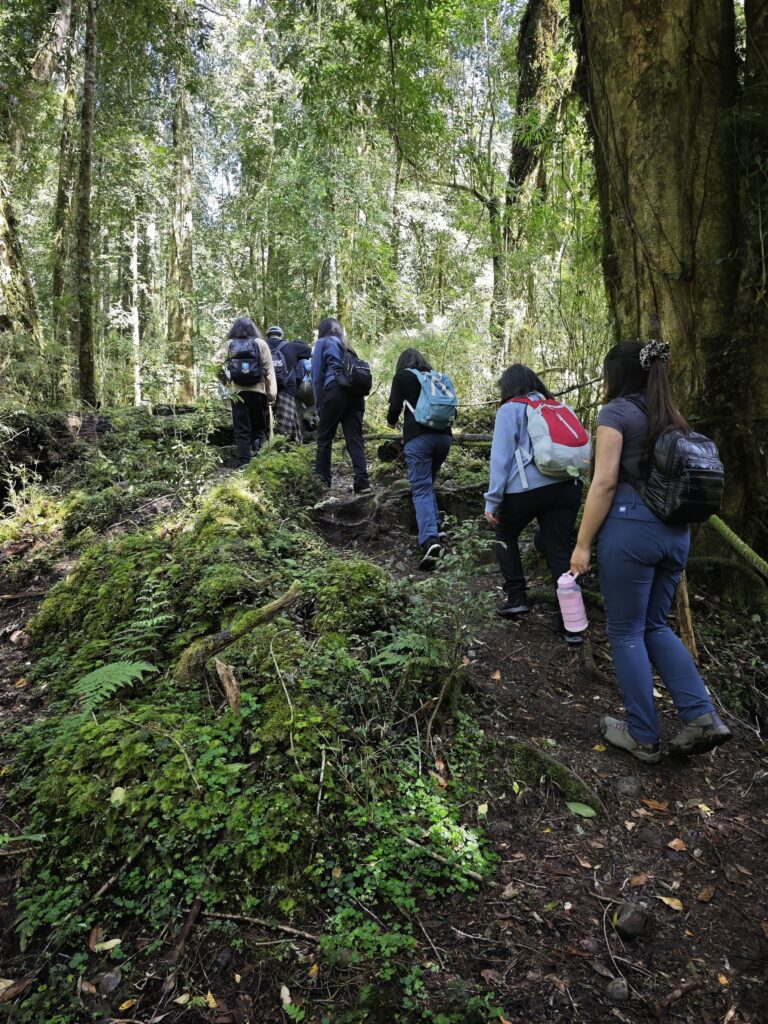
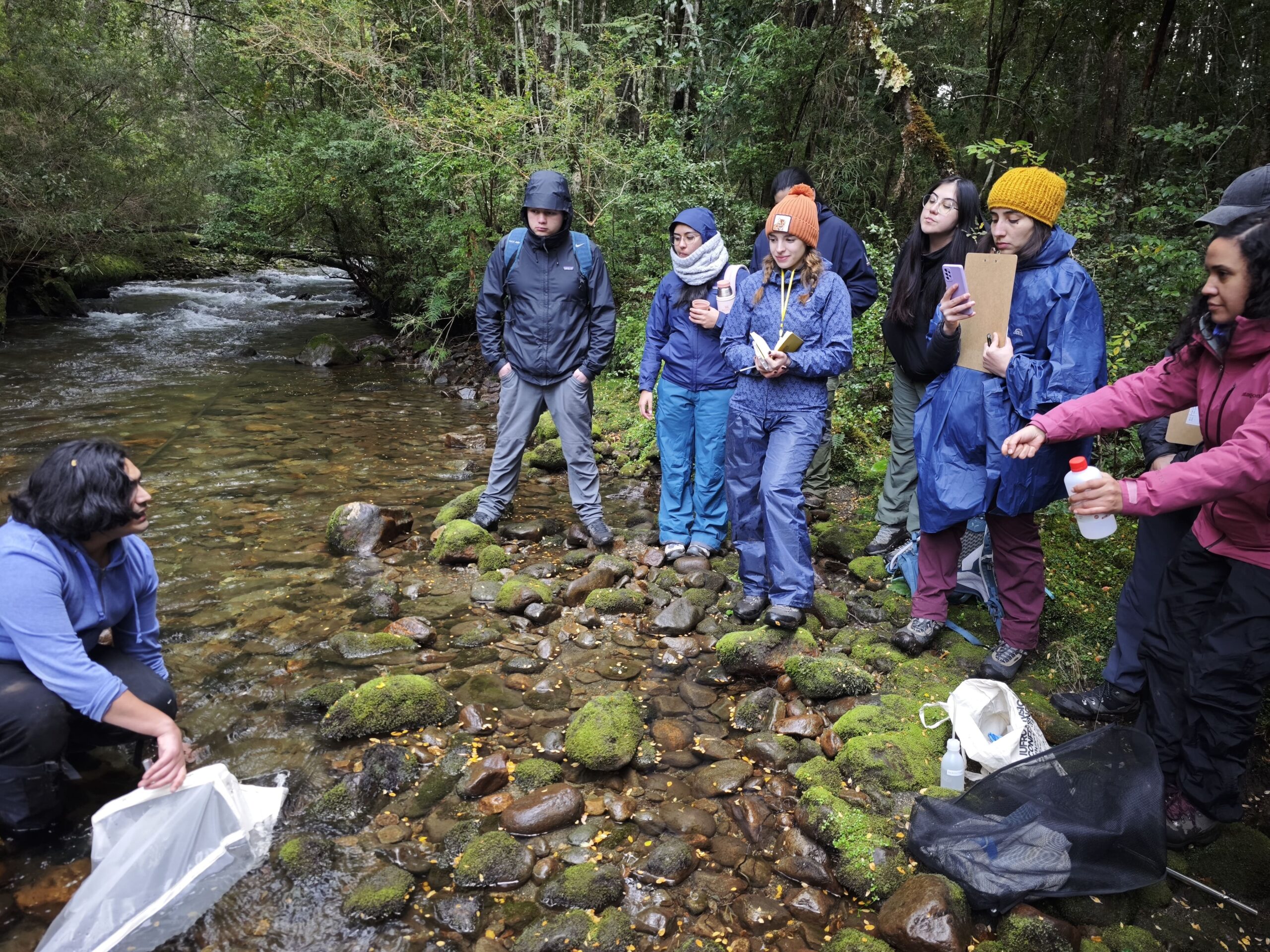
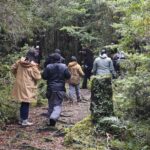
Throughout 2025 and 2026, the “Sendero Vivo” program has organized mindful immersion sessions along the Bosque del Oro Verde Trail, located in the El Tabo area, 19 kilometers from Puerto Aysén. This setting holds significant natural and cultural value for the municipality. It is home to native species characteristic of temperate forests and forms part of the natural history, rootedness, and sense of belonging of the people who inhabit the area.
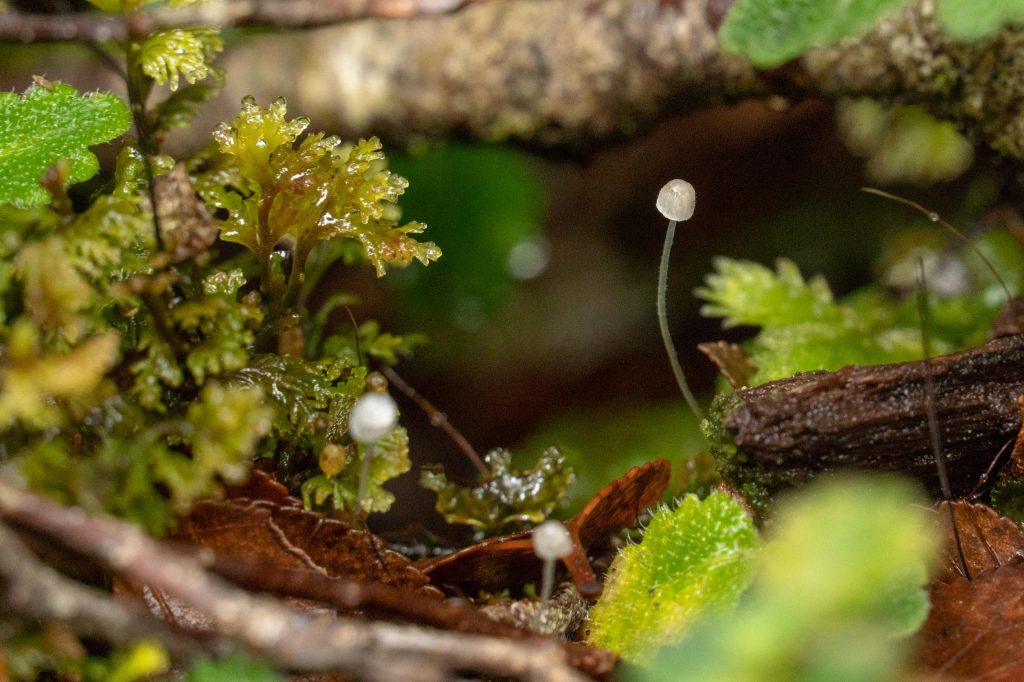
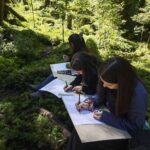
During these walks, participants have been invited to take part in mindful breathing exercises, deep listening, observation of the forest’s miniature ecosystems, and the exploration of textures and scents. The sessions have also included moments of contemplation and silence, allowing each participant to connect with the surroundings through their own experience. During one session, magnifying glasses and microscopes were used to observe different species and elements of the forest’s microscopic world; during another, participants sampled sage and tepa infusions.
Together, these activities make it possible to discover the flora, fauna, and fungi found along the trail, not only from a scientific perspective, but also through their cultural, sensory, and emotional dimensions. Observing the details of the forest floor, recognizing the scents of plants, and listening closely to the sounds of the surroundings helps broaden participants’ awareness and perception.
“Sendero Vivo” continues to create opportunities for people to reconnect with the land through their senses. Each new session offers an invitation to recognize nature as a place of learning, well-being, identity, and connection. Returning to the forest also means understanding that our health and the health of ecosystems are woven into the same web of life.
References:
Chapin, F. S., III, Kofinas, G. P., & Folke, C. (2011). Principles of Ecosystem Stewardship: Resilience-Based Natural. Resource Management in a Changing World. Springer.
Hansen, M. M., Jones, R., & Tocchini, K. (2017). Shinrin-Yoku (Forest Bathing) and Nature Therapy: A State-of-the-Art. Review. International Journal of Environmental Research and Public Health, 14(8), 851. https://doi.org/10.3390/ijerph14080851
Ives, C. D., Giusti, M., Fischer, J., Abson, D. J., Klaniecki, K., & Dorninger, C. (2017). Human–nature connection: A multidisciplinary review. Current Opinion in Environmental Sustainability, 26, 106–113. https://doi.org/10.1016/j.cosust.2017.05.005
Li, Q. (2010). Effect of forest bathing trips on human immune function. Environmental Health and Preventive Medicine, 15, 9–17. https://doi.org/10.1007/s12199-008-0068-3
Park, B. J., Tsunetsugu, Y., Kasetani, T., Kagawa, T., & Miyazaki, Y. (2010). The physiological effects of Shinrin-yoku (taking in the forest atmosphere or forest bathing): evidence from field experiments in 24 forests across Japan. Environmental Health and Preventive Medicine, 15, 18–26. https://doi.org/10.1007/s12199-009-0086-9
Restall, B., & Conrad, E. (2015). A literature review of connectedness to nature and its potential for environmental management. Journal of Environmental Management, 159, 264–278. https://doi.org/10.1016/j.jenvman.2015.05.022