
«Silent Vectors»: AI and Bioacoustics for Health Surveillance of Wild Birds from a One Health Perspective
The Patagonian fjords constitute one of the most biodiverse ecosystems on the planet, yet they face growing challenges associated with human activities and recent environmental changes. In this context, seabirds play a key role as ecological connectors between different territories and as potential vectors of pathogens that can affect the health of wildlife, ecosystems, and people. In response to this scenario, Fundación Kreen is leading a project in Patagonia that combines artificial intelligence and bioacoustics to develop a bird monitoring and early warning system based on the One Health approach.
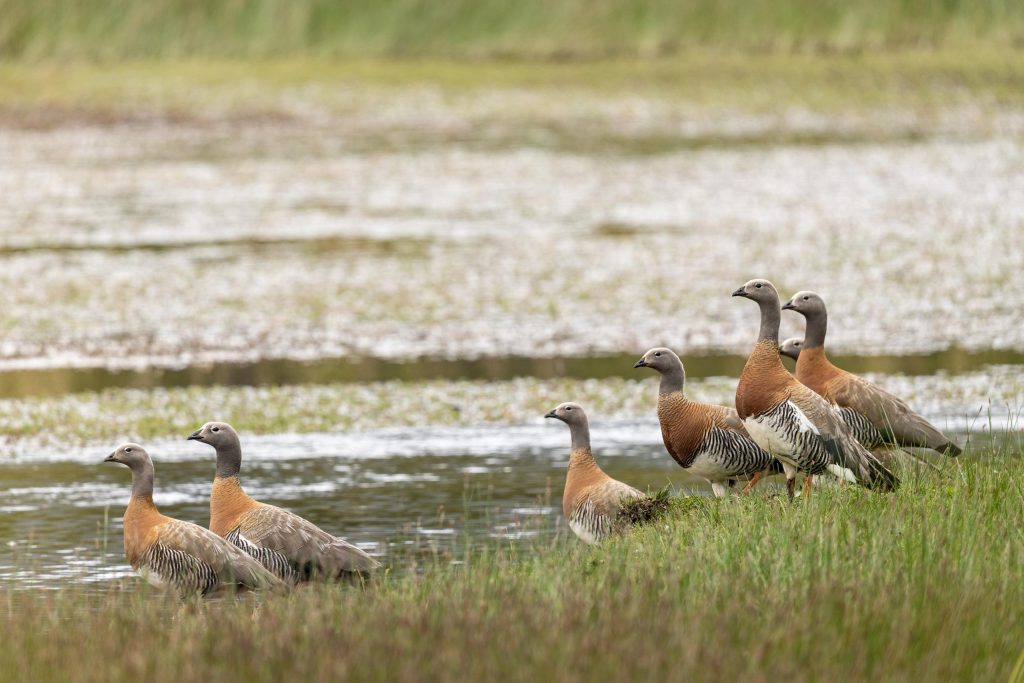
Canquenes. ©Fundación Kreen
There are several areas with potential risks for disease transmission, associated with both production environments—such as aquaculture facilities and poultry production operations—and natural ecosystems. In both types of settings, birds can act as vectors or reservoirs of a wide range of pathogens, facilitating their spread across ecosystems, animal species, and potentially to humans. While attention has traditionally focused on production systems, the role of birds in their natural habitats and the ecological conditions that may promote pathogen circulation have received far less scientific attention.
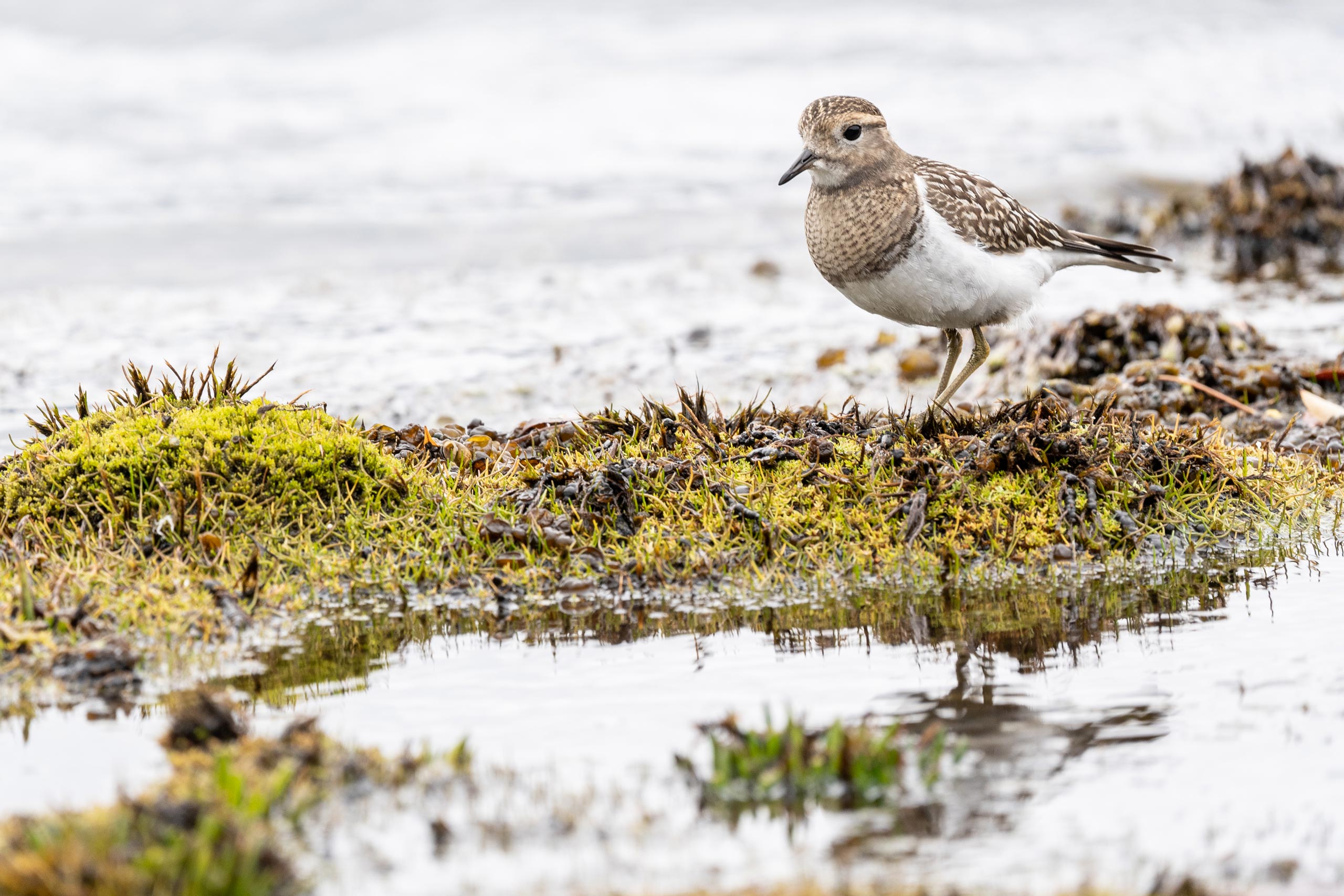

Patagonian Fjords: Ecological Interfaces for Pathogen Transmission
Patagonian fjords are naturally nutrient-poor ecosystems where activities such as salmon aquaculture, together with erosion processes, soil loss, and the input of organic matter from surrounding watersheds, can significantly increase food availability. This can promote the aggregation of wild birds and increase opportunities for interspecific contact, creating favorable conditions for the transmission, amplification, and spread of infectious agents.
Chile is the world’s second-largest producer of farmed salmon and hosts hundreds of aquaculture sites within the same fjords where generalist seabirds, such as gulls, nest, forage, and move across the landscape. Due to their ability to travel between human-modified and natural environments, these species may act as vectors of pathogens, potentially transmitting them to other bird species that do not necessarily use aquaculture facilities as feeding grounds.
At the same time, these fjords provide habitat for species of conservation concern, including the Flightless Steamer Duck (Tachyeres pteneres) and the Pink-footed Shearwater (Ardenna creatopus). Both species are currently classified as threatened or near threatened under Chile’s Species Classification Regulation (RCE, 2026)“.
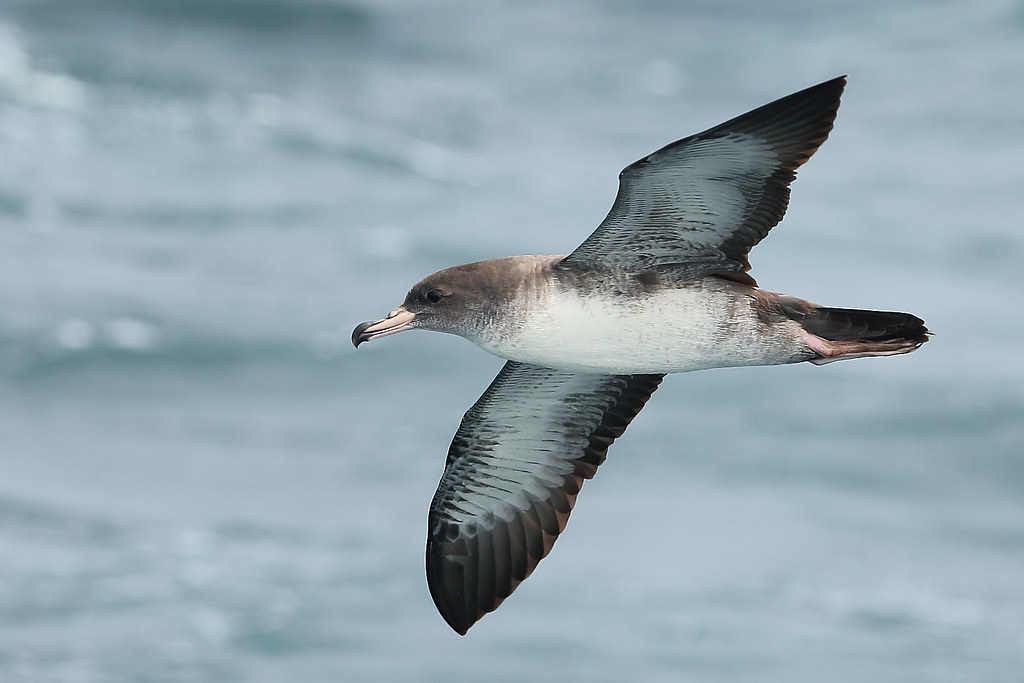
Pink-footed Shearwater. ©Pablo Caceres Contreras
Salmon Aquaculture, Wild Birds, and Ecosystem Health
Salmon aquaculture can significantly alter the environmental quality of coastal waters through the release of nutrients, organic waste, and chemical compounds associated with production activities (Naylor et al., 1998). In Chilean Patagonia, the industry uses and releases more than 350 metric tons of antibiotics annually, contributing to the presence of these compounds in the marine environment. This is compounded by the continuous input of fecal matter and uneaten feed that escapes from aquaculture cages, increasing the organic and nutrient loads in ecosystems that are naturally resource-poor.
This combination of chemical contamination and organic enrichment constitutes an environmental pressure that may promote the emergence, persistence, and spread of antibiotic-resistant bacteria and other pathogenic microorganisms. In this context, researchers at the University of Austral Chile demonstrated that salmon farms in the Chiloé Archipelago are contributing to the dissemination of antimicrobial-resistant bacteria (ARB) and antibiotic resistance genes (ARGs). The study found evidence that the Hudsonian Godwit (Limosa haemastica) may transport these bacteria and resistance genes from the coasts of Chiloé to other locations along its migratory route, thereby expanding the geographic reach of this phenomenon (Navedo et al., 2021).
These findings add to a growing body of evidence recognizing birds as biologically plausible vectors for the spread of infectious agents, owing to their high mobility and ability to connect ecologically distinct environments. Birds may forage in areas influenced by industrial activities and subsequently move into ecosystems of high conservation value, such as the Meullín–Puye Nature Sanctuary. However, there are currently no active monitoring systems capable of systematically assessing which microorganisms or biological contaminants are being transported by these species, nor the potential risks they may pose to local biodiversity.
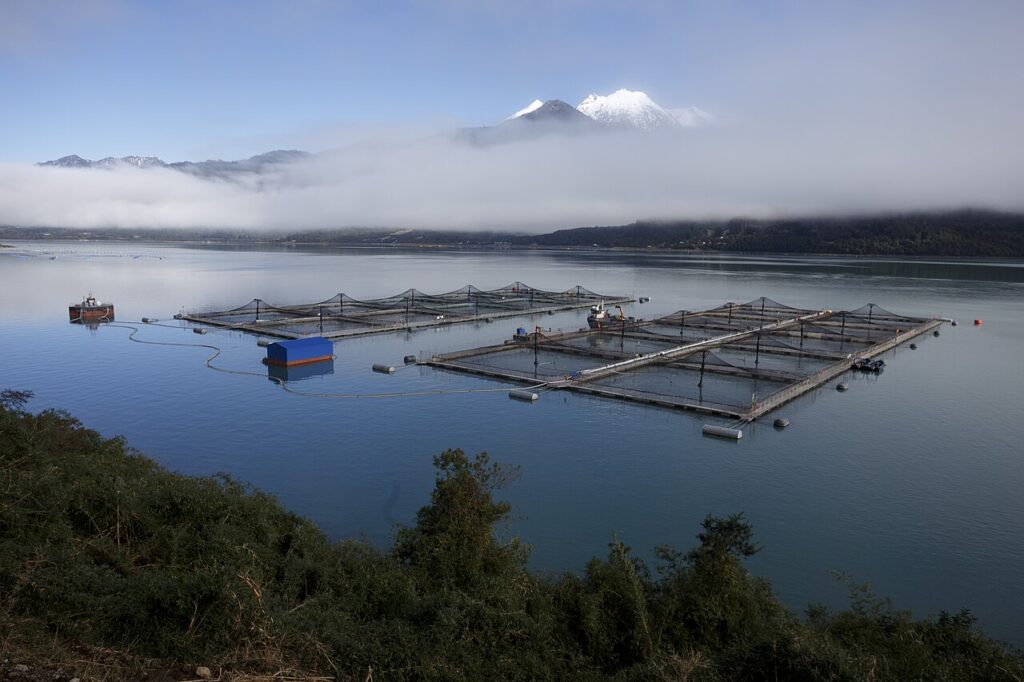
Salmon farming center in the Reloncaví estuary, Cochamó commune, Los Lagos Region, Chile. ©Jackripper11
Migratory Birds and Disease Dissemination
Migratory birds play a fundamental ecological role by connecting ecosystems separated by thousands of kilometers through movements carried out under extreme environmental conditions. These migrations are natural processes that have shaped ecosystems for millions of years and facilitate the exchange of energy, nutrients, and biodiversity across vast geographic regions. However, in a context of increasing human pressure on natural environments, ecological disturbances may alter patterns of species interactions and promote new pathways for the circulation of pathogenic agents.
The importance of understanding these processes became evident in early April 2026, when Chile’s Agricultural and Livestock Service (SAG) issued an alert regarding a new outbreak of Highly Pathogenic Avian Influenza (HPAI), H5N1 strain, in the Ñuble Region. Subsequently, on April 20, a case of HPAI was confirmed in a Ruddy-headed Goose (Chloephaga picta), a native wild bird species classified as Vulnerable (VU), detected in the municipality of Chile Chico in the Aysén Region.
These events highlight the need for monitoring systems capable of detecting ecological changes and potential disease risks in wild bird populations before they escalate into broader threats to biodiversity, animal health, and human well-being. Understanding how birds move across landscapes and interact with both natural and human-modified environments is essential for strengthening early warning capacities under a One Health framework.
The Silent Vectors Project
On one hand, the expansion of the salmon farming industry across the Patagonian fjords, together with the extensive use of antibiotics and the continuous release of nutrients into coastal ecosystems, has raised concerns about its largely unseen impacts on wildlife. On the other hand, the confirmation of H5N1 avian influenza cases in different regions of Chile has exposed a critical gap in disease surveillance. In response to this scenario, Fundación Kreen has decided to combine field research, acoustic sensors, and artificial intelligence to listen to what has so far gone undetected. It is within this context that Silent Vectors was born.
The project aims to develop an automated ecological and health monitoring system for Chilean Patagonia. The initiative focuses on migratory seabirds that move between industrial salmon farming sites and protected ecosystems, under the hypothesis that these species may be transporting antibiotic-resistant bacteria, biological contaminants, and even H5N1 avian influenza across different environments. The project will also consider low-mobility species, such as the Flightless Steamer Duck (Tachyeres pteneres), which reside permanently in the region and may be affected by the introduction and circulation of these pathogens, serving as indicators of disease-related impacts on local wildlife.
To achieve this, the Foundation began deploying acoustic sensors within the Meullín–Puye Nature Sanctuary and subsequently integrated Perch v2—an AI model developed by Google DeepMind capable of recognizing thousands of species from their sounds. The goal is to create the first comprehensive acoustic inventory of this Chilean Patagonian sanctuary and to advance toward an early warning system for emerging diseases based on the One Health framework.
Progress and Early Results
Since November 2024, the project has operated three BirdWeather PUC acoustic sensors within the sanctuary. These devices continuously record the soundscape and analyze recordings using artificial intelligence. During their first 14 months of operation, the sensors generated more than 1,700 confirmed detections across 21 species, producing georeferenced and timestamped data that were automatically stored in the cloud. However, the team required a more open, trainable, and scientifically reproducible platform.
To address this need, Perch v2 was incorporated into the project workflow. Building upon this system, the team developed a geofencing layer designed to restrict AI detections exclusively to species known to inhabit or migrate through Patagonia and the Aysén Region. Through this process, 35 ecologically relevant species were selected, and detection thresholds were calibrated according to habitat type, enabling large-scale analyses of thousands of sanctuary recordings.
The results demonstrated the remarkable potential of artificial intelligence for conservation applications. Analysis of 4,998 recordings produced 49,383 acoustic detections corresponding to 35 different species, including the six sentinel species defined by the project—species that are particularly sensitive to environmental change and whose presence or absence can serve as indicators of ecosystem health.
Among the most notable findings was the Flightless Steamer Duck (Tachyeres pteneres), a vulnerable and endemic species that was detected 1,343 times in areas where its occurrence has been independently confirmed through field observations. Thousands of detections were also recorded for migratory and marine species such as the Black-browed Albatross (Thalassarche melanophris), the Magellanic Penguin (Spheniscus magellanicus), and the Peregrine Falcon (Falco peregrinus), the latter accounting for nearly 5,000 detections with consistently high confidence scores. In addition, the implementation of geofencing substantially reduced false positives generated by Northern Hemisphere training biases, significantly improving detection accuracy across the Patagonian fjords.
This project is only beginning. Its long-term vision is to integrate these technologies with ecological monitoring, wildlife health surveillance, and climate change research, ultimately developing automated systems capable of supporting the conservation of southern ecosystems over the coming decades. All methods, code, and datasets will be made openly available to ensure transparency, reproducibility, and broad scientific collaboration.
In a region where environmental change is occurring faster than traditional monitoring systems can keep pace, this project demonstrates that technology can become a powerful ally for nature—a way to listen to, understand, and protect the far south of the planet before many of its voices disappear.
References:
González-Acuña, D., Llanos-Soto, S. (2019). Una revisión sistemática de los patógenos virales y bacterianos de aves silvestres en Chile. Corci Zoonosis.
Molnár, K. (1989). Fish disease problems related to birds. En: Report of the EIFAC Working Party on Prevention and Control of Bird Predation in Aquaculture and Fisheries Operations (FAO).
Navedo, J., Araya, V., & Verdugo, C. (2021). Upraising a silent pollution: Antibiotic resistance at coastal environments and transference to long-distance migratory shorebirds. Science of The Total Environment, 777. https://www.sciencedirect.com/science/article/abs/pii/S0048969721010718?dgcid=author
Naylor, Rosamond & Goldburg, Rebecca & Mooney, Harold & Beveridge, Malcolm & Clay, Jason & Folke, Carl & Kautsky, Nils & Lubchenco, Jane & Primavera, Jurgenne & Williams, Meryl. (1998). Nature’s Subsidies to Shrimp and Salmon Farming. Science. 282. 883-884. 10.1126/science.282.5390.883.