Science and Local Knowledge Come Together to Explore the Medicinal Potential of Aysén’s Native Flora
November 5, 2026Over two days of community gatherings in Puerto Aysén, the Plantas que Sanan (Healing Plants) programme, led by Fundación Kreen, shared the latest findings from its research into the properties of native plants found in the Meullín-Puye Nature Sanctuary. The gatherings highlighted the value of the region’s native flora and fostered an exchange of botanical knowledge.
Held on 29 and 31 October 2026, the events presented key findings from the scientific and social research carried out throughout the year. This work has helped deepen our understanding of the properties of compounds found in the Sanctuary’s vegetation while also shedding light on the cultural and community ties between local people and the plants in their surroundings.
“We want this research to go beyond scientific findings and engage in a dialogue with the experiences and knowledge rooted in the territory. Plants are part of the history and everyday lives of many communities. Recognising this connection allows us to understand their value from a much broader perspective, one that brings together ecological, cultural and social dimensions,” said Eduardo Muñoz, Fundación Kreen’s Terrestrial Ecosystems Coordinator and project lead.
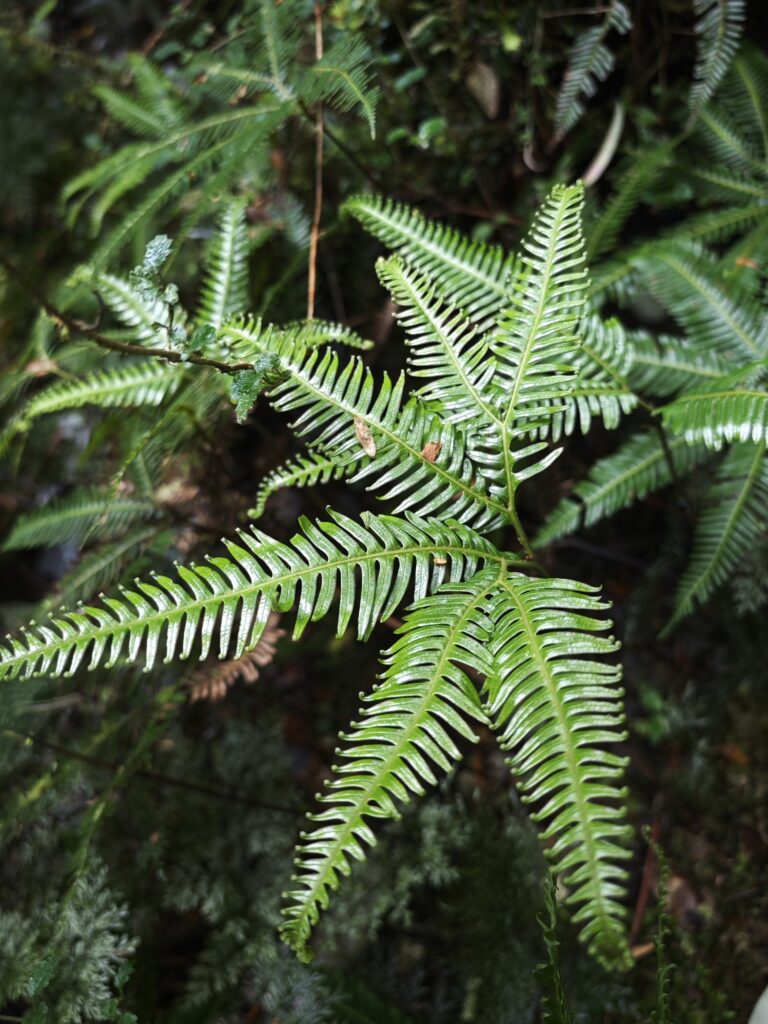
Preliminary Research Findings
Among the scientific findings shared during these gatherings were the first results from the analysis of seven plant, moss and lichen species found in the Sanctuary: chapel (Escallonia virgata), hierba loza (Sticherus spp.), ciprés (Pilgerodendron uviferum), pompón (Sphagnum sp.), Leifidium tenerum, Racomitrium lanuginosum and Hebe salicifolia. Samples were studied in laboratories at Universidad Andrés Bello (UNAB) and Pontificia Universidad Católica de Chile (UC), where their natural compounds were analysed and their biological potential explored.
So far, the analyses have identified 204 chemical signals, 27 of which correspond to phenylpropanoids, a family of compounds associated with antioxidant, anti-inflammatory and antimicrobial properties. In addition, the hierba loza extract showed a selective effect on HeLa tumour cells under laboratory conditions. This is a preliminary finding that requires further research to better understand its potential implications. Molecular analysis has also provided insights into the ecological roles of certain compounds, broadening our understanding of the Sanctuary’s ecosystems.
Alongside the scientific research, the project has also made progress in documenting traditional knowledge and practices associated with local flora. During a recent visit to Isla Huichas, community workshops were held with children, alongside gatherings and interviews with local residents. These activities provided an opportunity to collect knowledge, experiences and perspectives on the gathering, cultivation and medicinal uses of different plant species.
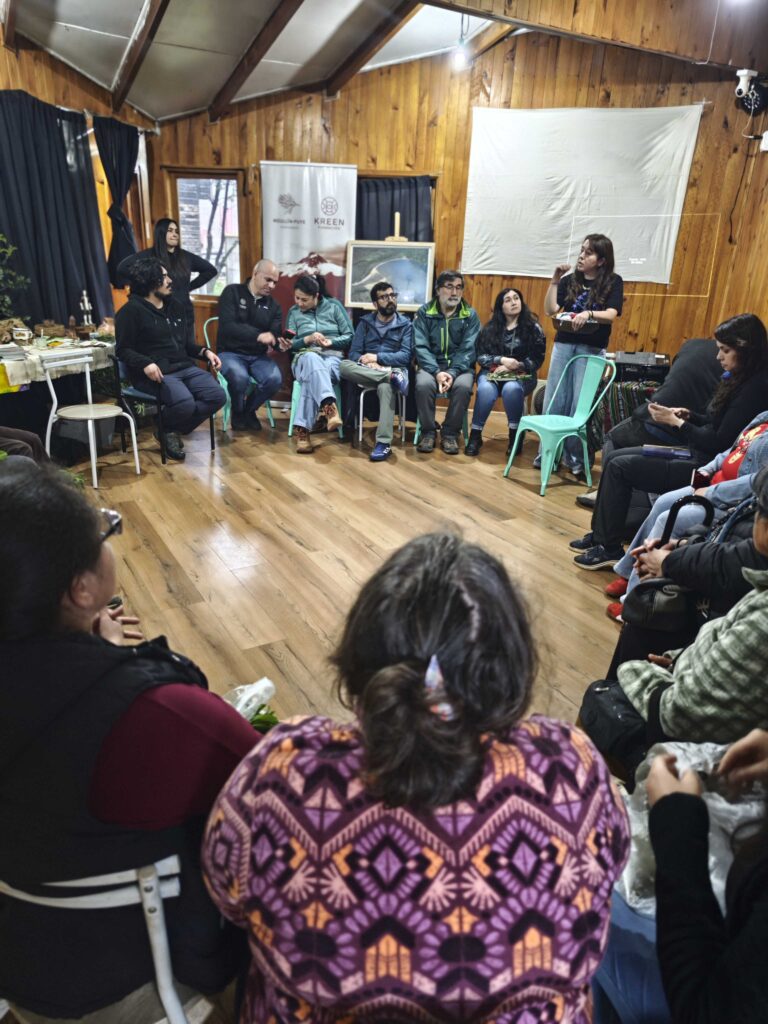
Hands-on Activities
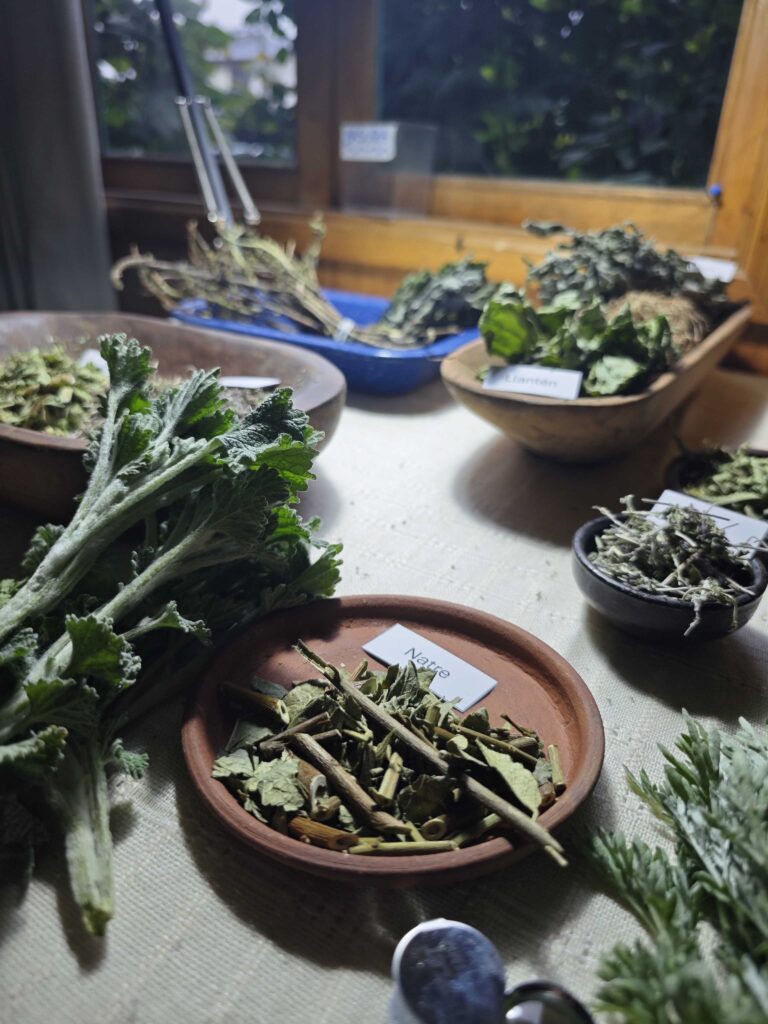
One of the programme’s highlights was the workshop held on Saturday, 31 October, which brought together nearly 30 participants. The session focused on making handcrafted medicinal kits for community use, through the preparation of medicinal oils and extracts using commonly used plants and Lion’s Mane mushroom. The workshop was led by Aurora Mansilla Lepio, a member of a Mapuche-Williche community and a healthcare worker at the Aysén Family Health Centre (CESFAM), and Carolina Otero, a biochemist and scientific researcher at Universidad Andrés Bello. The session also benefited from the participation and support of researcher Francisco Ceric, a biologist from Universidad del Desarrollo.
Drawing on their different backgrounds and areas of expertise, the facilitators created a space for exchange where scientific and traditional perspectives came together to explore the medicinal uses of plants. The workshop concluded with a reflection on the relationship between traditional preparations and natural cycles.
Beyond making medicinal products, the workshop provided an opportunity to recognise and value the knowledge of those who keep these practices alive, fostering collective learning and the sharing of experiences. The participation of women from different parts of the region, including Cochrane and Lago Paloma, also highlighted the interest among both rural and urban communities in recovering, sharing and deepening this knowledge.
“An important part of this work is recognising the people who safeguard this knowledge. They are often women, particularly from older generations, who have learned from their families and communities but do not always have spaces where they can share what they know. Creating these opportunities for exchange also means recognising their contributions, strengthening local networks and opening up opportunities for this knowledge to be passed on to future generations,” added Eduardo Muñoz.
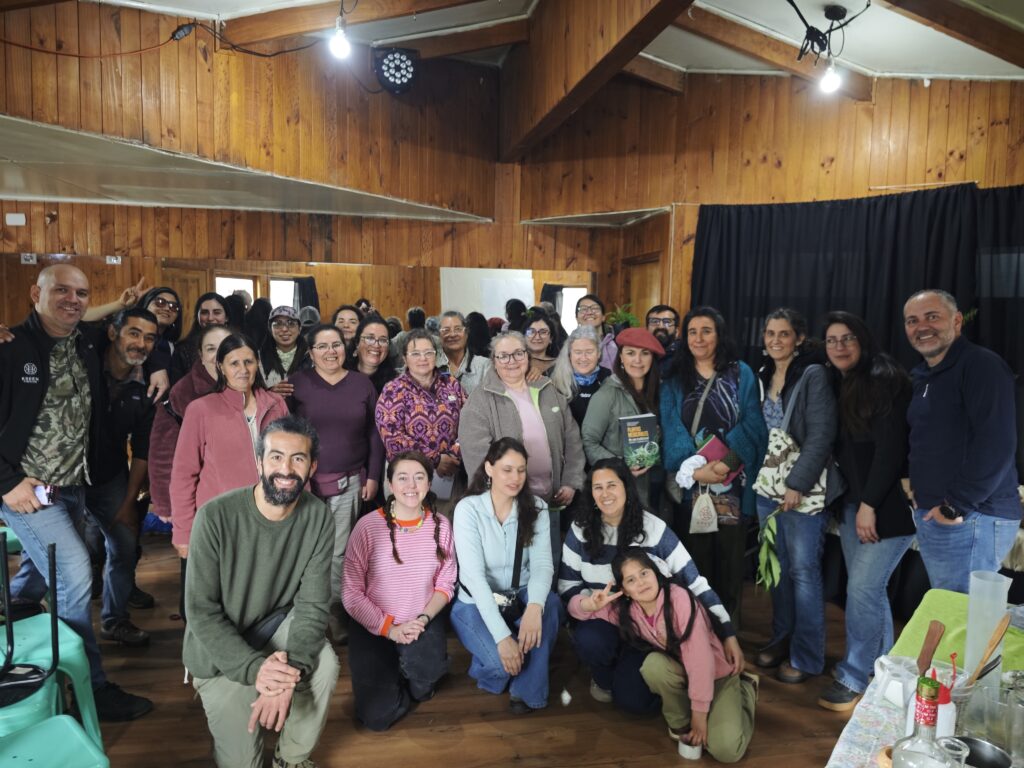
Strengthening Local Networks and Connections
The Plantas que Sanan programme focuses not only on generating scientific knowledge, but also on recognising the social and cultural dimensions associated with native flora. In this regard, community gatherings have been essential in identifying new local stakeholders interested in the work being carried out at the Sanctuary and expanding opportunities for collaboration between rural communities, healthcare professionals and researchers.
These connections help foster a biocultural understanding of the territory, in which ecosystem conservation also takes into account the relationships, practices and knowledge that communities have developed around their natural environment.
Fundación Kreen would like to extend its special thanks to everyone who took part in these gatherings, particularly the women who travelled from different parts of the region, local media outlets for their interest and coverage, the Municipality of Puerto Aysén, and the wider Aysén community. We also acknowledge the contributions of Lorna Molndehauer, cultural manager and food engineer, who coordinated the workshops and led the social research on plants in the municipality of Aysén, and Fernan Silva, Renewable Natural Resources Analyst at SAG Aysén, who joined us during the first gathering.
This work contributes to a research approach grounded in the local context, recognising the value of traditional knowledge and fostering exchange between the community and the scientific team. It also provides valuable groundwork for shaping future community engagement initiatives and sharing research findings with local communities.