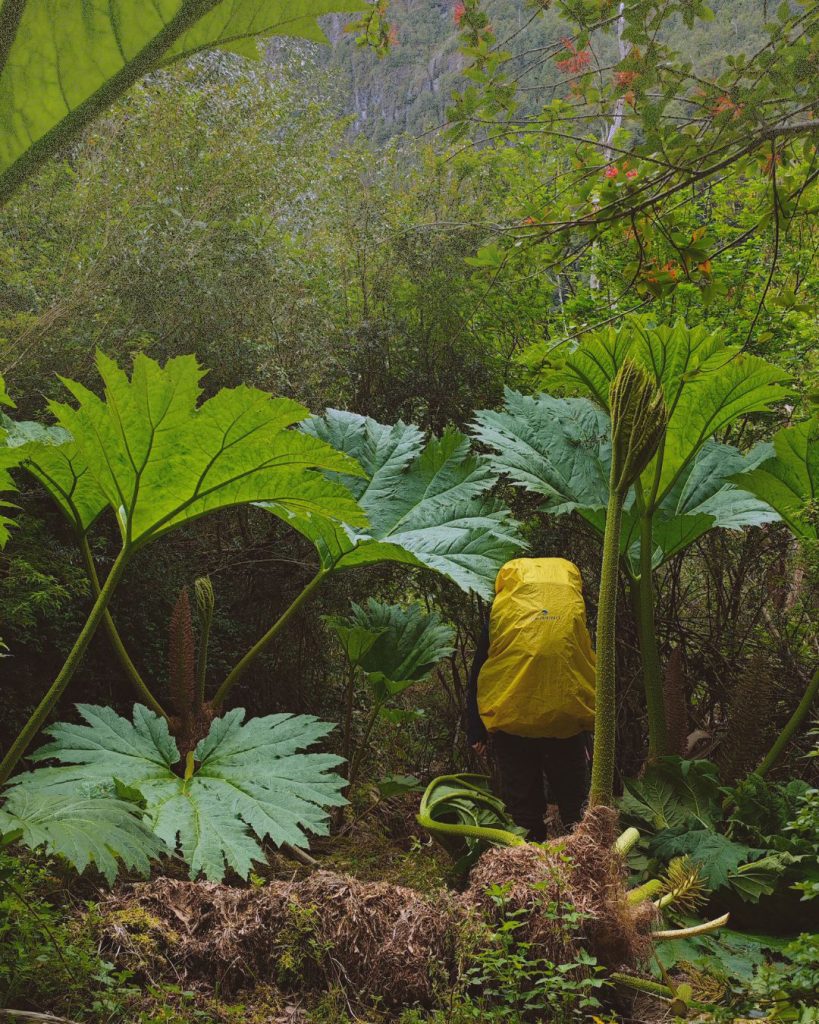
Camera Trap Records the Monito del Monte for the First Time in the Tabo River Basin
January 29, 2026After an intensive search effort by the Foundation’s team, the presence of the monito del monte in the Tabo River basin, very close to the Meullín-Puye Nature Sanctuary, was finally confirmed. This discovery represents the first photographic record confirming the species’ distribution in the Aysén Region and is also the southernmost known record of the species.
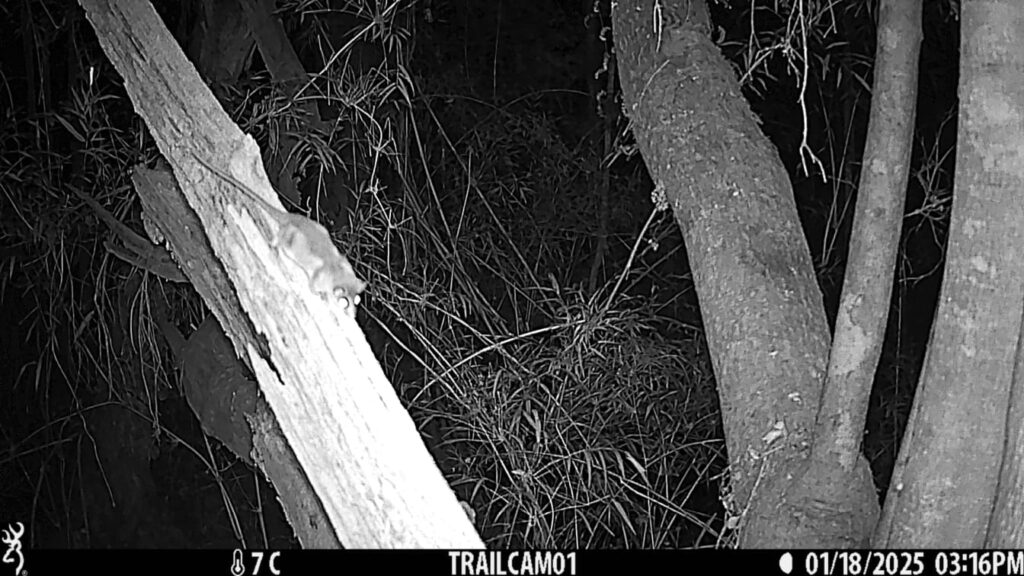
The monito del monte (Dromiciops gliroides) is a species endemic to the temperate rainforests of southern Chile. It is strongly associated with old-growth Nothofagus forests that have a dense understory of bamboo such as quila and coligüe, although the species has also been recorded in peri-urban areas and in plantations of exotic tree species. Despite its broad tolerance of different environments, D. gliroides is unable to move across open habitats and is therefore particularly vulnerable to human pressures such as habitat loss and fragmentation (Vásquez et al., 2022), which makes the acquisition of new records especially important for its conservation.
This small marsupial, one of the four species found in Chile, is reported by most sources to be distributed from the Maule Region to the Los Lagos Region. However, a few months ago the Kreen team retrieved camera traps that recorded the presence of the species in a more southerly area. This finding is particularly significant because, although a broader distribution than previously known had been suspected, these images confirm its presence in the Aysén Region. Thus, the records obtained constitute the southernmost photographic evidence currently available for the monito del monte.
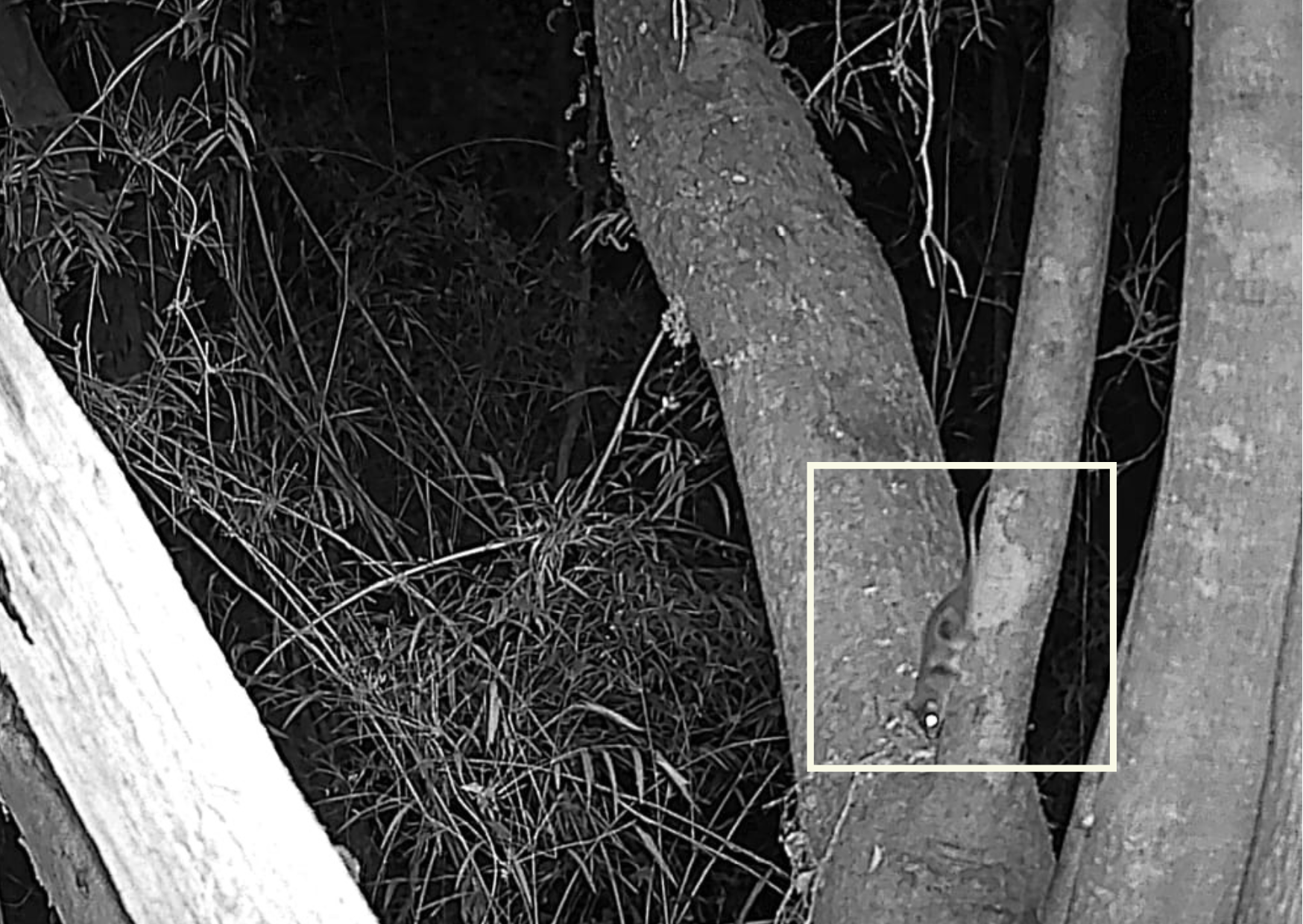
On the IUCN Red List, the species is classified as Near Threatened, meaning that although it does not currently meet the criteria to be considered critically endangered, it is close to doing so or may do so in the near future. For this reason, it is essential that each new record helps to shed light on its ecology and behavioral patterns, which are difficult to observe because it is a nocturnal species. In this context, camera traps are a particularly suitable tool for studying it.
These records encourage us to continue monitoring the species in Patagonian forest ecosystems. The information obtained will allow us to guide future monitoring efforts toward areas of higher activity and to deepen our understanding of its population, its distribution range, and other characteristics.
If you would like to learn more about this marsupial, we invite you to visit the “Eco Graph” section of our website, where you will find an infographic dedicated to the monito del monte.
Cover image: © José Luis Bartheld