Environmental DNA sampling to understand biodiversity in protected areas
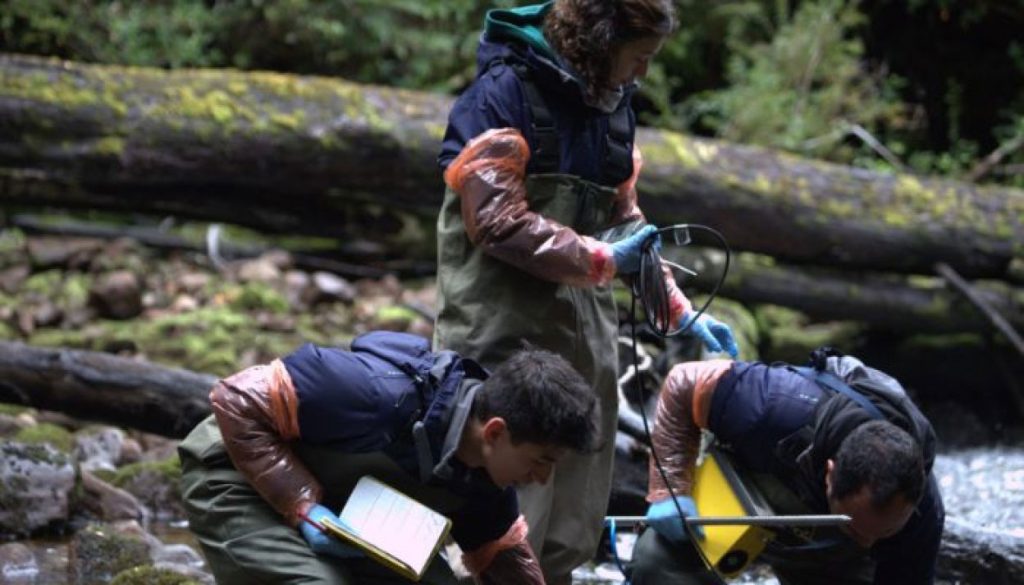
May 14, 2024Recently, we moved to the Aysén fjord to work on-site with a team from the University of Aysén led by researcher Delphine Vanhaecke.
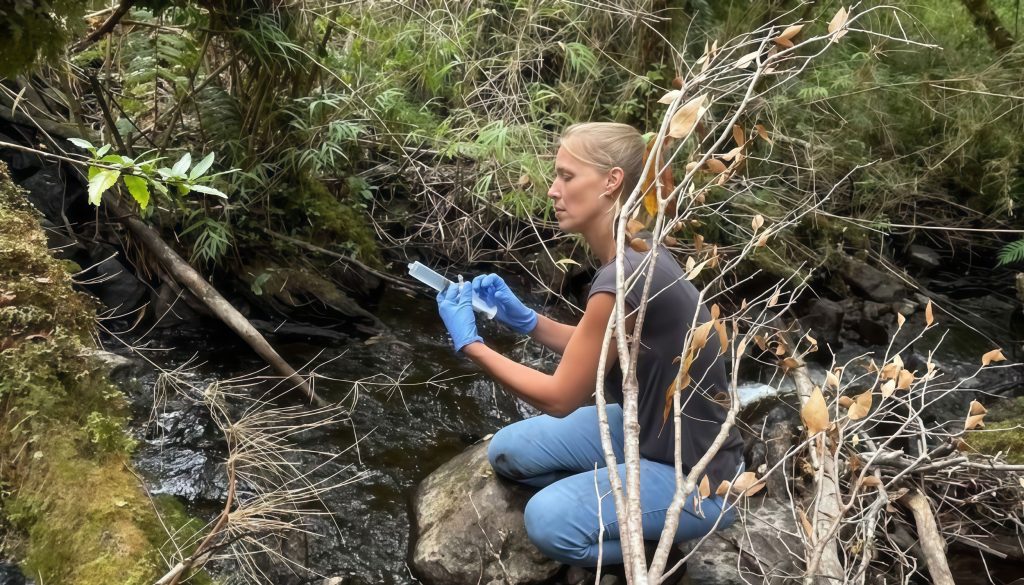
The objective was to collect environmental DNA samples from the Tabo River and the mouth of the Cuervo River.
Environmental DNA sampling is a new technique that involves collecting and filtering water to detect species present in a given location. This is possible thanks to the analysis of the genetic material left behind by animals or organisms (hair, dead skin, urine, feces, or others) when they come into contact with the water.
This type of sampling is important for protected areas such as the Meullín-Puye Nature Sanctuary, where access is very difficult and, therefore, the species present are difficult to detect using traditional techniques.
This collaborative fieldwork with the Kreen Foundation is part of the FIC project, called MOBI Aysén 2.0, of the University of Aysén, which includes environmental DNA sampling in various protected areas of the Aysén Region.