Did you know that it is possible to identify which species inhabit or pass through a place by searching for traces of DNA?
February 26, 2025Thanks to new technologies and molecular methodologies, an environmental sample can be analyzed to detect genetic material released by organisms, thereby becoming an indicator of their presence in a given place.
In this way, it is possible to obtain essential information about the biodiversity present in an area and to implement management plans, monitoring programs, and public use or tourism strategies that are sustainable and environmentally responsible.
This was the focus of the project “MOBI-Aysén 2.0: tools to discover biodiversity with the community,” developed by the University of Aysén, which, among the protected areas studied, included four sites within the Meullín–Puye Nature Sanctuary and its surrounding areas.
In the sanctuary, researchers—including members of the Fundación Kreen team—were able to confirm the presence of the large puye (Galaxias platei), the small puye (Galaxias maculatus), and the güiña cat (Leopardus guigna), all of which are species classified under conservation status. In addition, the study detected the novel presence of the emerald frog (Hylorina sylvatica) and the pouched lamprey (Geotria australis).
Environmental DNA samples collected as part of this project also revealed the presence of some invasive species, such as the wild boar (Sus scrofa) and the American mink (Neogale vison), reinforcing the need to monitor these protected areas in order to advance their conservation.
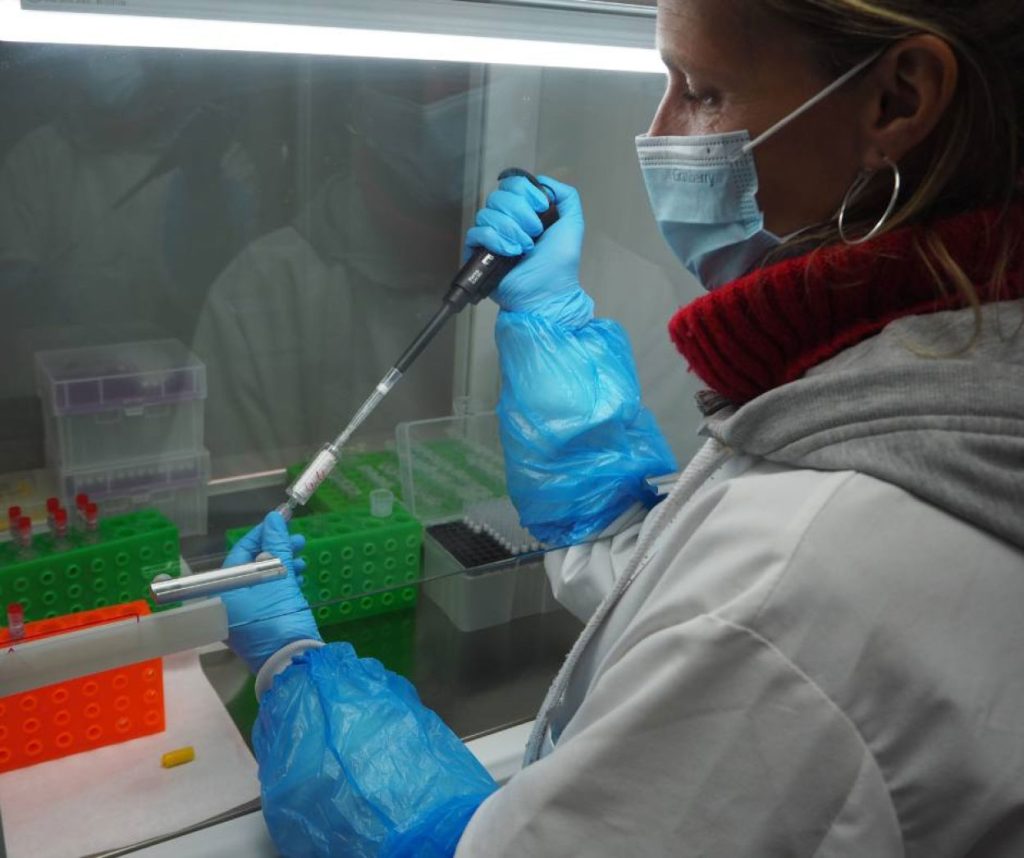
In the photograph, University of Aysén researcher and academic Delphine Vanhaecke can be seen performing DNA extraction from the samples. This is a revolutionary technique that allows for non-invasive studies to obtain information and population censuses and, on this occasion, enabled us to learn more about the sanctuary and its surrounding areas.